
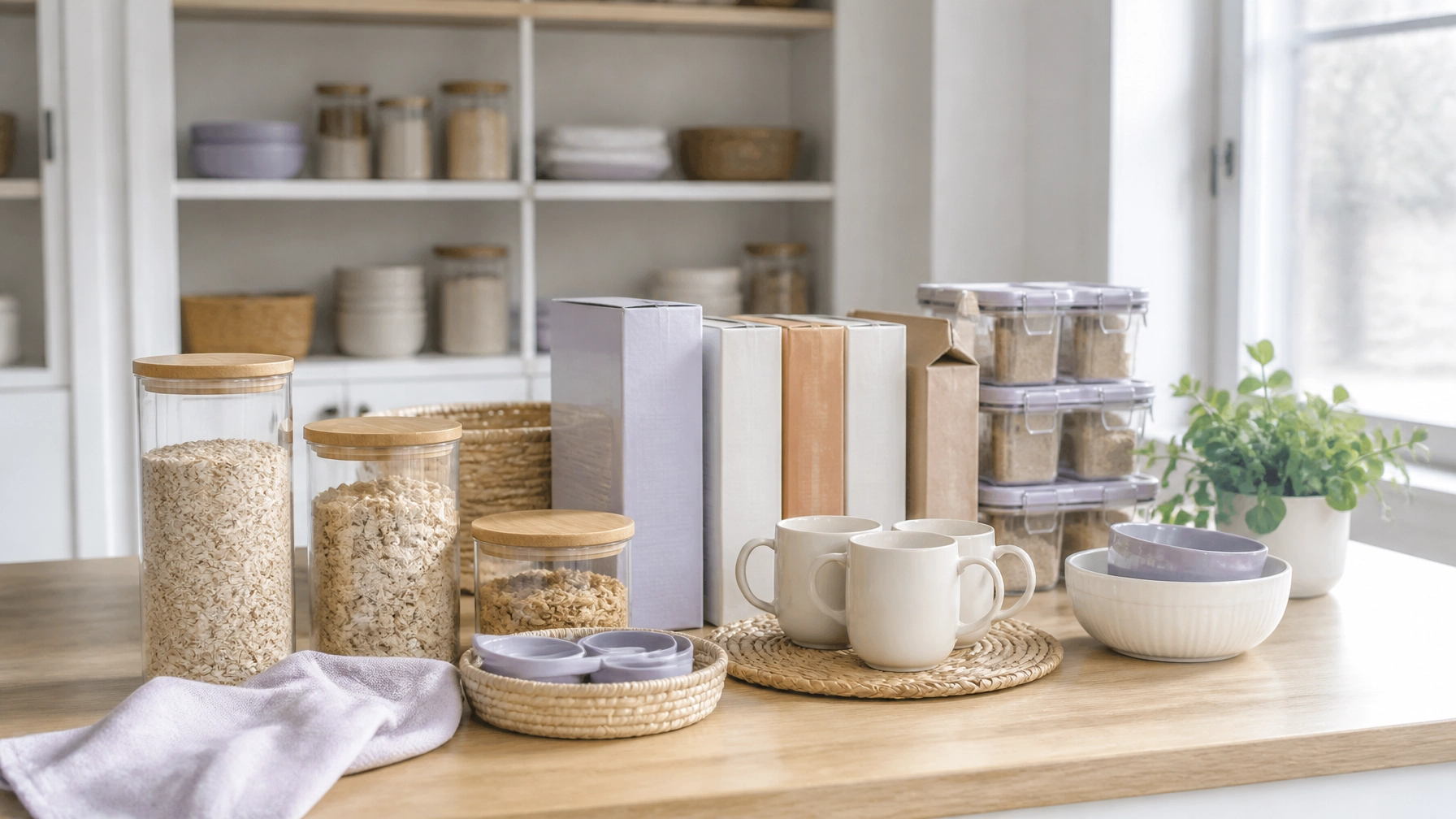
If you’re looking for practical kitchen organization tips, start with the habits and expectations behind the mess: not the bins. As a professional home organizer, I focus on functional kitchen organization and realistic kitchen organization systems that work for the whole household!
1. You own more than your kitchen can realistically hold
This is the biggest culprit in most homes, so we're starting here.
A cereal box has one bowl left, but a replacement flavor is already open. Soon there are five, all nearly empty. Sound familiar? It's not just cereal: coffee mugs, dishes, food-storage containers, water bottles, and kitchen tools do the same thing.
The good news? You don't need to feel bad about it. Great intentions built that collection! But here's the reality: if there are two coffee drinkers and 37 mugs, the answer isn't a better mug rack. It's a gentle, realistic adjustment to what you keep.

Try this: Keep your variety to 1–3 choices per category: cereals, snacks, pasta shapes, whatever your family loves most: and simply rotate in a new option when one runs out. You still get variety, minus the tower of half-empty boxes. And remember: the more you own, the more you have to store, clean, and maintain.
This applies to every category in your kitchen. If you have more dishes, containers, and tools than your household can reasonably use, maintaining the space will always feel like a chore. What could you let go of to make room for more calm?
2. Frequently used items aren't where you actually use them
Everyday dishes, glasses, cooking tools, and go-to foods deserve prime real estate.
Even better? Put them within easy reach of where they're used. Pot holders by the stove. The can opener near the canned goods. Everyday plates at waist height, not above the fridge.

When the things you reach for daily are hidden, too high, or tucked behind rarely-used items, the kitchen feels frustrating: even if everything technically has a home.
A good system reduces extra steps. You shouldn’t have to cross the kitchen for a tool you use beside the stove, or dig through a crowded drawer for something you reach for every morning.
Try this: Notice where you naturally use each item, then store it as close to that location as possible. Where would your kitchen feel easier if one daily item were moved just a few feet?
3. The system depends on perfect habits
Here's the truth: your kitchen probably isn't used by just one person. And it's not surprising that a system only you can decipher falls apart.
If the whole family is going to use the kitchen, the system has to be obvious enough for everyone. Clear categories, simple labels, and shared expectations go a long way.

Try this: Decide what needs to happen, who's responsible for it, and where each item lives. When the system is visible and labeled, everyone can pitch in: even the little ones.
It helps to think beyond where things go. Who unloads the dishwasher? Who clears the counters? Who checks the leftovers? When responsibilities are assumed instead of discussed, one person often ends up carrying the entire workload.
The best kitchen organization systems are easy for the people using them to understand and maintain. What would change if everyone in your kitchen knew exactly what was expected?
4. Your buying habits don't match your space
Small kitchens have limits. So do bigger kitchens when the shopping comes home from the big membership stores.
Here's the thing: a good deal only saves money if the items get used before they take over your shelves or expire. Buying in bulk works when storage is ample and usage is high: not when it creates a bigger problem than it solves.
Try this: Match your purchases to your actual space and how often your household uses each item. Let the pantry you have: not the one you wish you had: guide what comes home.
Before buying multiples, take a quick look at what you already have and where it will go. If there isn’t a clear storage location, that may be a sign to buy less.
You can still shop strategically while protecting your space. Would buying smaller quantities help your kitchen stay calmer and your food stay fresher?
5. There's no small, shared reset routine
A kitchen doesn't need a weekly overhaul to stay functional. It needs a little attention, close to daily, shared by the people who use it.

Try this: Make the everyday routine small: dishes done and counters cleared, as often as possible. Then add one gentle weekly touch, like checking leftovers on garbage day and returning misplaced items to their homes.
The goal isn't perfection. It's stopping a small mess before it becomes an overwhelming one.
A short, shared routine is much easier to continue than a major cleanup that only happens when everyone is already stressed. Keep the process simple, close to daily, and clear enough that each member of the family can participate.
What would you do with the extra time and relief that come from a kitchen reset you don’t have to manage alone?
A functional kitchen starts with realistic expectations
Most kitchen organization problems aren't about missing containers. They're about having more items than the space can hold, storing everyday things where they're hard to reach, and building systems without clear expectations for everyone who uses the kitchen. When the system matches your real life, keeping it going gets a whole lot easier.
You don’t need a picture-perfect kitchen. You need a space that supports the people who live there, makes daily tasks easier, and continues to function on your busiest days!
If your kitchen feels crowded or hard to maintain, The Shelf Helper can help you create a functional system built around your real life. Explore our home organization services or contact us to get started.
Leave a Reply