
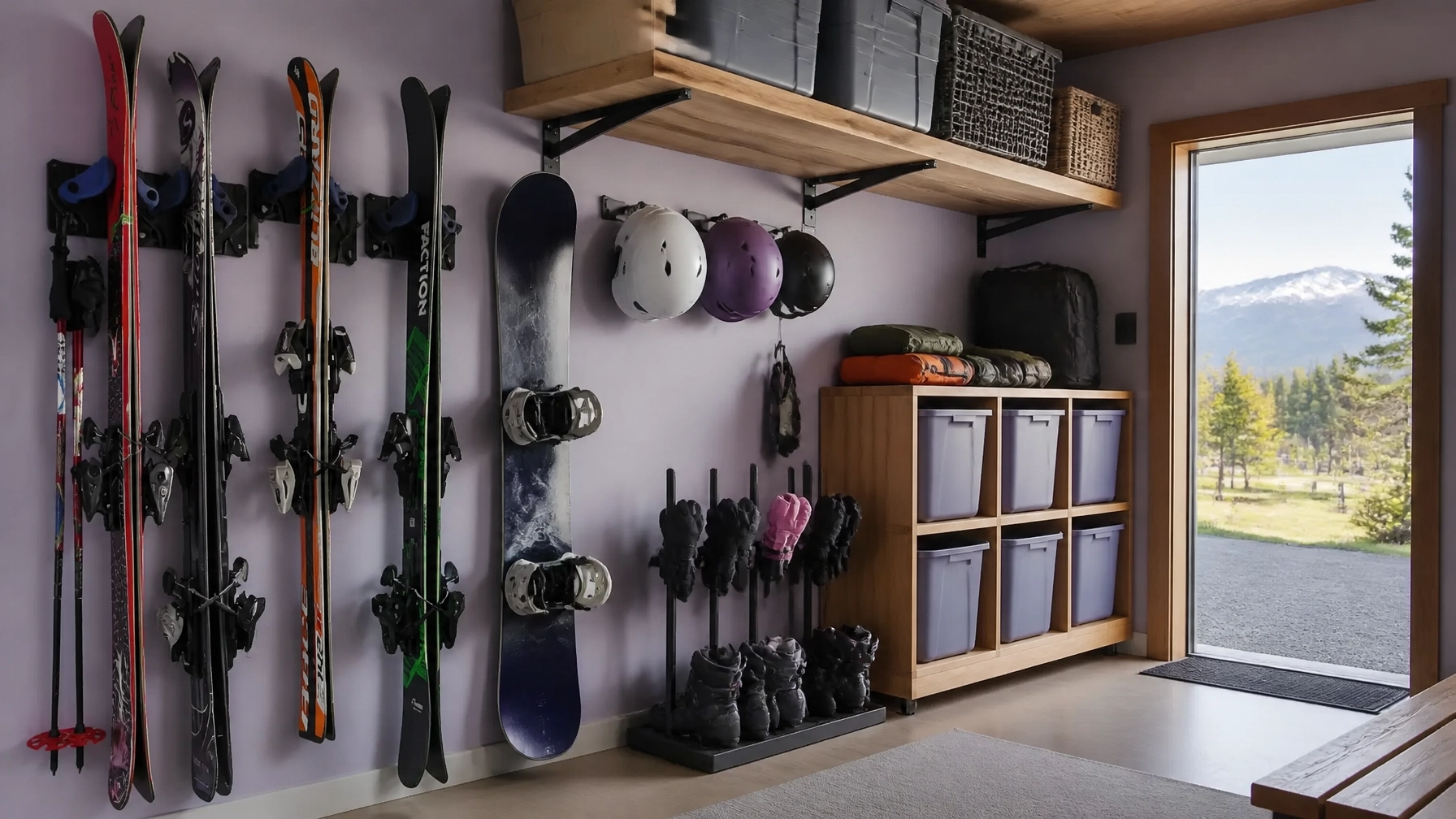
Summer is winding down, but if you live in the Flathead Valley, you know what is coming. The ski boots are whispering from the garage. The sleds are waiting in the rafters. And somewhere between the mudroom and the basement, your summer gear is still taking up prime real estate.
This is the moment many families get stuck. Summer gear lingers, winter gear piles up, and before long you are stepping over kayak paddles on your way to the snowblower!
It is not surprising. Montana families use a lot of specialized gear, and intentions were great. The problem usually is not the gear itself. It is the lack of a repeatable system.
Here is the fix: pair your seasons and swap them.
Give Each Season a Partner and One Storage Spot
I like to pair similar activities so one season naturally takes the place of the other in the same storage location.
Try these combinations:
- Ski and snowboard gear ↔ water-sports gear
- Fly-fishing gear ↔ ice-fishing gear
- Hiking gear ↔ snowshoeing gear
- Dirt-biking gear ↔ snowmobiling gear
- Biking gear ↔ sledding gear
When the season changes, you simply bring the current gear forward and move the off-season gear back into that same spot. For example, ski gear comes into the accessible garage zone while water gear moves into long-term storage. Then you reverse it when summer returns.

Would it feel like a relief to know exactly where each season’s gear belongs before the weather changes?
Start with a Simple Seasonal Staging Area
Before you begin, clear a small staging area in the garage or mudroom so you can see what is coming out, what is going in, and what needs attention.
I recommend handling the swap in this order:
- Pull out the gear that is leaving the active zone.
- Check for damage, missing pieces, or outgrown items.
- Clean and dry everything before storing it.
- Create a donate, repair, or discard pile.
- Bring the next season’s gear forward.
- Store the off-season gear in its paired location.
You do not need to reorganize your entire garage in one afternoon! Focus only on the seasonal gear zones.
If a life jacket is cracked, a boot no longer fits, or a piece of equipment was not used all summer, this is a good time to decide whether it belongs in the Bye-Bye Box instead of taking up space for another year.
Keep Current-Season Gear Easy to Grab
The gear you use this week should not be buried behind gear you will not use for six months.
Keep everyday items at hand level:
- Winter coats and snow pants
- Daily boots
- Hats, gloves, and scarves
- Kids’ sledding gear
- Frequently used helmets
- Snow shovels and snow brushes
Use hooks, open baskets, sturdy shelves, and boot trays so your family can grab what it needs without creating a new pile. Less frequently used gear can go higher or deeper in the garage.
In the mudroom, keep only what your family is actively using. Light jackets, sun hats, sandals, and summer shoes can move into labeled bins or closets until they are needed again.
What would your mornings feel like if everyone could find winter gear without asking you where it went?
Use the Same Storage Location Every Season
One of the biggest mistakes I see is changing the storage location every year. That creates a memory problem for the whole household.
Instead, label the area by the activity pairing:
- Winter sports / water sports
- Ice fishing / fly fishing
- Snowshoeing / hiking
- Snowmobiling / dirt biking
- Sledding / biking
You can use a shelf label, a simple bin label, or a small written inventory. The system does not need to be fancy. It just needs to be clear enough for your family to follow when life gets busy.
This helps prevent “temporary” storage from becoming permanent and keeps off-season gear from lingering in the mudroom or blocking the garage walkway.
Make Helmets Part of the Rotation
Helmets are especially easy to scatter. Bike helmets end up near the bikes, motorcycle helmets end up in the vehicle, and ski helmets somehow migrate to the floor.
I love using wall-mounted helmet racks because they keep helmets visible, ventilated, and off the floor. In our system, biking, motorcycle, and ski helmets can use the same storage area. We simply rotate the current season’s helmets to the bottom.

That small rotation keeps the current-season helmets easiest to reach while the others stay stored but available.
You can find the helmet racks I use here.
Before installing any wall storage, check the manufacturer’s weight guidance and use appropriate hardware for your wall type.
Get Skis Off the Floor
A pile of skis in the corner is a classic garage eyesore. It takes up floor space and makes equipment harder to grab when you are trying to get out the door.
Wall-mounted ski or snowboard racks are a simple solution. I use these Gravity Grabber ski racks in my own home. They hold skis securely, keep poles together, and make the whole area feel calmer and more intentional.

When summer arrives, that same zone can support the paired water-sports gear. That is the value of this system: you are not starting over every season!
Keep the Boot Dryer Out Year-Round
Some gear-storage tools should not be put away at all.
The boot dryer I use lives out year-round. It dries ski and sledding gear, wet biking gear, gloves, and the shoes that “accidentally” fall into the creek again!
You can find the boot dryer here.
Keeping it near the mudroom or garage entry makes it part of the daily process instead of something you have to dig out when the weather turns wet.
A drying station helps contain moisture and gives your family an obvious place to put wet gear when they come home.
Could one year-round drying station eliminate some of the stressful wet-gear pileups in your home?
The Swap Rule That Keeps Everything Moving
Here is the rule I use: when this season’s gear comes out, last season’s gear goes away.
If summer gear is still sitting in the active zone when winter gear comes out, you lose the space you need fast. Give yourself permission to work in stages, but finish each paired zone before moving to the next one.
As you put items away:
- Clean and dry them
- Check for damage
- Remove broken or outgrown items
- Group similar gear together
- Label bins clearly
- Store them in the paired location
Then bring the current-season gear forward and make sure the daily-use items are easy to reach.
A Note from the Field
I do this seasonal swap in my own home every year, and I use the same practical approach when planning storage systems for The Shelf Helper. When the first cold snap hits, summer gear is already in its long-term spot, winter gear is waiting where I expect it, and we are not hunting for a helmet at 6 a.m. on a powder day!
That is the goal: not perfection, but relief. A system that works with your family’s routines, supports the adventures you actually enjoy, and continues to make life easier each time the seasons change.
The Shelf Helper can help you create a functional garage or mudroom system that fits your household. Contact us to get started.
Full disclosure: This post contains product recommendations. The Shelf Helper may earn a small commission if you purchase through these links. Product availability and pricing may change. Please review our Privacy Policy and Affiliate Disclosure for more information.
Leave a Reply