
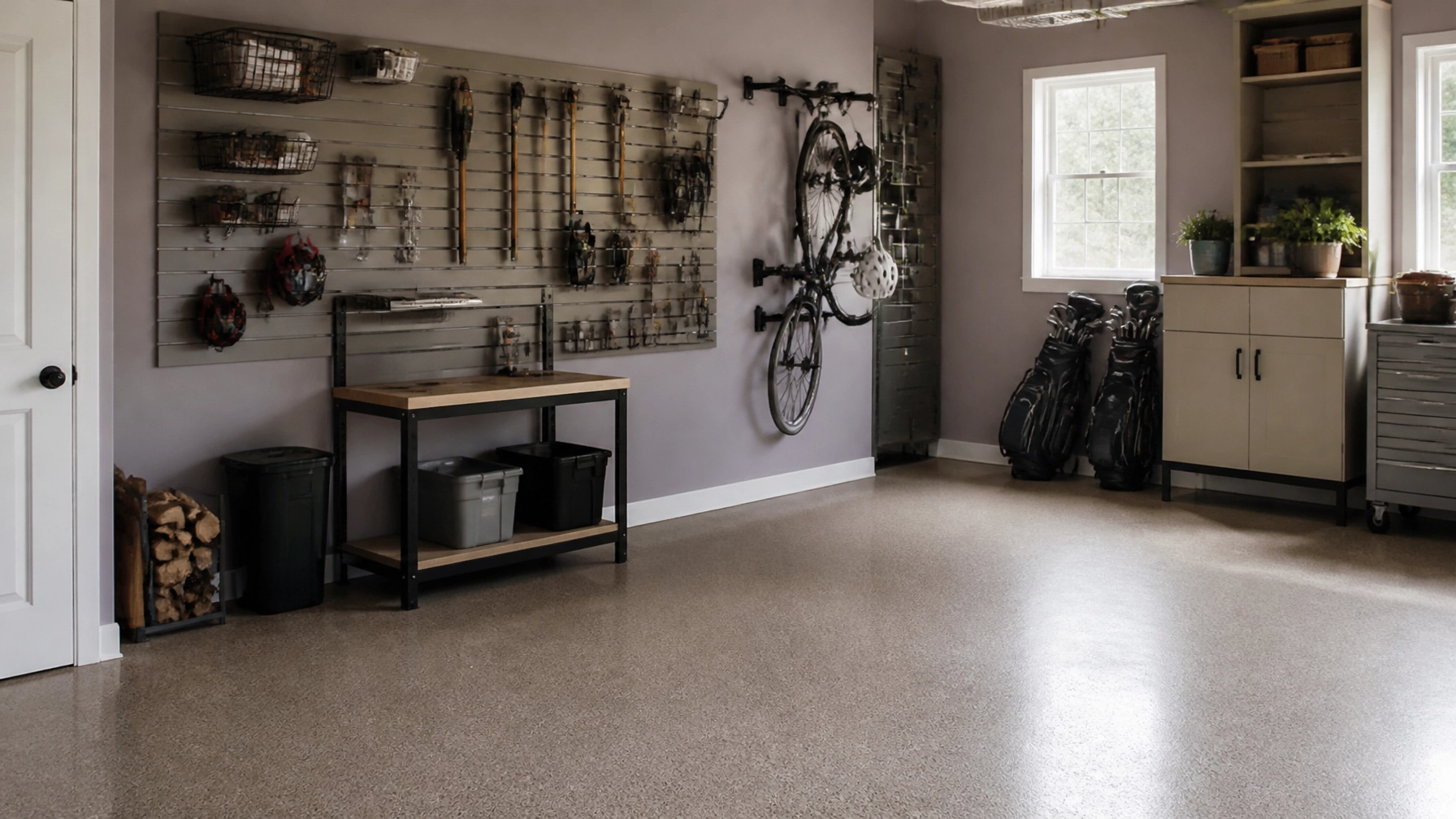
A garage can only hold a limited amount of stuff and still function as a garage!
When the floor is crowded with bins, sports equipment, tools, seasonal décor, and items waiting for a future project, more storage products will not solve the problem. Adding shelves to an overfilled space may simply create a taller version of the same overwhelm.
At The Shelf Helper, I believe in function over fashion and organizing for real life. A garage does not need to look like a showroom. It needs to support the way your family actually moves, parks, plays, works, and changes!
The most important step in garage organization is often editing what stays.
Start With Capacity, Not Containers
Before you purchase bins or plan a storage wall, take an honest look at what your garage can safely and comfortably hold. Is there enough room to open vehicle doors, walk through the space, carry groceries, work on a project, or pull out a bike?
It’s not surprising if the answer is no. Garages often become the household catch-all because they feel like extra space. Intentions were great when items were placed there temporarily, but “temporary” can easily become several years!
Begin by sorting items into practical categories:
- Keep
- Donate or sell
- Recycle or discard
- Move elsewhere
- Decide later
As you edit, ask yourself:
- What do we use regularly?
- What needs easy access right now?
- What can be stored somewhere else?
- What are we keeping only for someday?
- Is this broken, duplicated, outgrown, or unused?
- Does this item earn the space it takes up?
Be especially careful with “just in case” items. Some are genuinely useful, but many are taking up valuable capacity without supporting your current life.
A garage with breathing room is more functional than a garage packed with good intentions. What would become easier if you had enough open space to move safely and use the garage again?

Organize Around Your Real Routines
Once you have edited the contents, organize what remains around your household’s actual routines: not an idealized version of your life!
Notice how your family enters and exits the home. Where do backpacks land? Where do shoes come off? Which sports equipment is grabbed several times a week? Where do gardening tools need to be when the weather changes?
Your garage organization plan should reflect:
- Entry points
- Vehicle placement
- Daily and weekly activities
- Family members who use the space
- Frequency of use
- Seasonal changes
Frequently used items should be easy to see and reach. Items used less often can go higher, farther back, or into long-term storage.
For example, bikes, helmets, outdoor toys, and frequently used tools may belong near the garage door. Holiday decorations or camping equipment used only a few times a year can be stored on higher shelving: as long as they remain safe and accessible when needed.
The goal is not to make every area equally convenient. The goal is to make the right things convenient for your family. Which items create the most daily friction when they are difficult to find?
Create Activity-Based Zones
A zone gives each category a clear neighborhood. When items used together live together, putting them away becomes much more of a breeze!
Here are a few garage storage ideas that support real household activities:
Outdoor Recreation
Keep bikes, scooters, helmets, camping gear, and outdoor toys together. Use sturdy hooks, open bins, or wall-mounted storage so the floor remains clear.
Tools and Home Maintenance
Create a home for hand tools, batteries, extension cords, light bulbs, and basic repair supplies. A pegboard, narrow shelving, or a labeled drawer system can keep frequently used items visible.
Gardening
Store hoses, gloves, pots, soil, rakes, and other gardening supplies together: ideally near the door leading outside. Grouping supplies by task makes yard work feel more straightforward.
Sports Equipment
Use low shelves, open baskets, or individual hooks for balls, bats, rackets, and protective gear. Make sure children can reach what they use regularly and return it without climbing or digging through a pile.
Seasonal Decorations
Holiday décor and seasonal supplies can share a defined zone in labeled containers. Keep these items higher or farther back if they are only used a few times each year.
Automotive Supplies
Create a contained area for car care products, windshield supplies, cleaning cloths, and emergency equipment. Keep hazardous materials secured and follow local guidelines for storing or disposing of chemicals and fuel.
Donations and Items Leaving the Home
Designate one small, temporary area for donations, returns, recycling, or items waiting to be picked up. The key word is temporary! Set a date for these items to leave so the donation zone does not become permanent storage.
When every activity has a home, does your family have a clear place for the things they use most?

Give Frequently Used Items Prime Access
Prime access means the easiest location to reach without moving three other things first!
Place everyday items at eye level, waist level, or near the door your family uses most. Use hooks for grab-and-go gear, open shelving for visible categories, and bins for smaller items that need containment.
Less-used items can go:
- On higher shelves
- Toward the back of the garage
- In overhead storage
- In clearly labeled long-term containers
- In another area of the home
Be thoughtful about weight and safety. Heavy items should not be stored overhead if they are difficult to lift or retrieve. Hazardous supplies should be secured away from children and pets.
Storage should support access: not create a new obstacle course! What would you stop losing, forgetting, or replacing if it had an obvious home?
Make Putting Things Away Obvious
A system only works long-term if everyone can understand it. Your garage should not depend on one person remembering where everything belongs!
Use simple labels such as:
- Sports
- Gardening
- Car Care
- Tools
- Camping
- Holiday
- Donations
Visible storage can be especially helpful for frequently used items. Clear bins, open baskets, hooks, and simple shelf labels reduce the need to search. If a category is too difficult to return, the system may need reworking.
Set shared expectations with everyone who uses the garage. For example:
- Bikes return to their hooks.
- Balls go in the sports bin.
- Tools return to the tool zone.
- Donations leave the home each week.
- The floor stays clear for vehicles and walking.
A system does not need to be complicated to be effective. It needs to be clear enough that your family can continue using it on a busy Tuesday night!
Leave Room for Real Life
The best garage organization plan includes empty space on purpose.
You need room for movement, projects, changing seasons, growing children, and changing interests. If every shelf and square foot is full on installation day, the system has nowhere to flex.
Leave some open floor space and a little room within bins and shelves. This gives your garage the capacity to absorb normal changes without immediately becoming stressful again.
You may also want to schedule a quick seasonal review. Remove outgrown equipment, edit duplicate supplies, and adjust zones as your family’s routines evolve. Organization is not a one-time fix: it is a process that should continue to support your life.
What could you do in your garage if it had enough room to adapt?

A Garage Designed for Your Family
At The Shelf Helper, I do not believe your garage needs to be perfect. I believe it needs to be functional, maintainable, and designed around the people who use it!
That may mean editing more than you expected. It may mean choosing fewer belongings, creating simpler zones, or moving items that never truly belonged in the garage. The result should be a space that offers relief instead of an eyesore: a garage that helps your family move through the day with less stress.
If you are ready to create a garage system built for real life, explore our home organization services or contact The Shelf Helper to get started. What would a calmer, more functional garage make possible for you and your family?
Leave a Reply